
Handleless kitchens: pros and cons
Handleless kitchens are the defining look of modern German design. They are not right for every home, though, and the three ways of achieving the look are not equal.
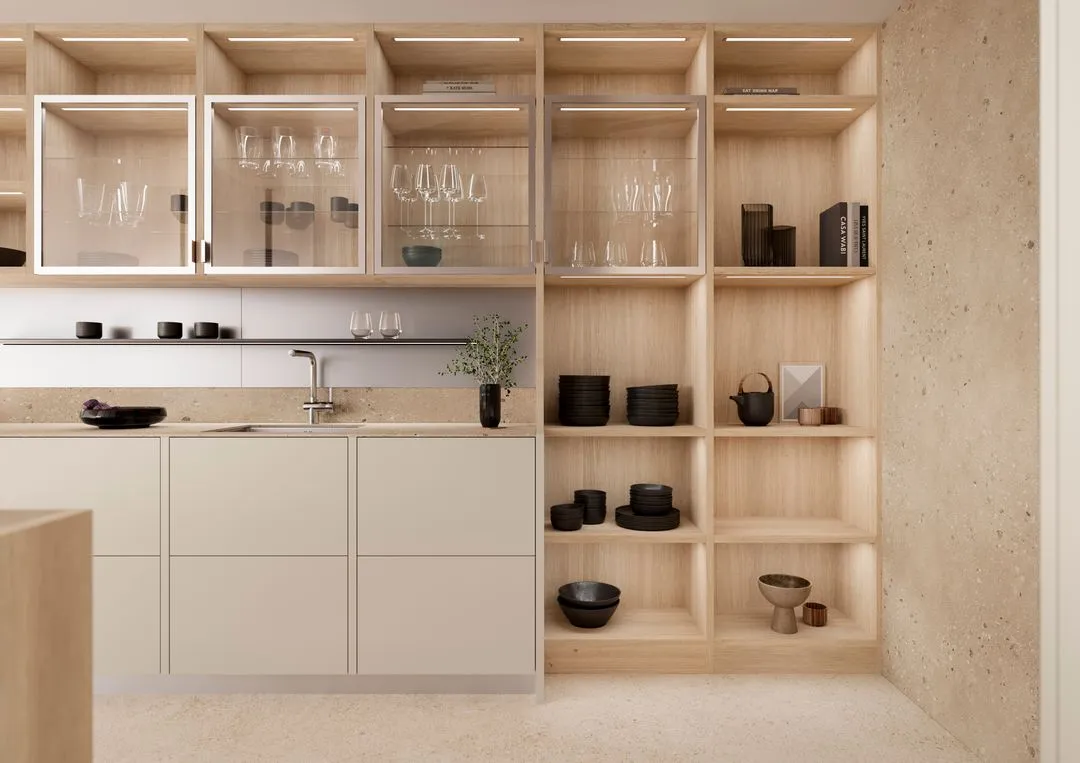
Ask most people to picture a German kitchen and they will picture a handleless one: flat fronts, unbroken lines, nothing to catch the eye or a sleeve. It is a look we design a great deal of, and it suits contemporary homes beautifully. Before you commit to it, though, it helps to understand how it is achieved and what you are trading for that clean line.
Three ways to go handleless
Recessed rail (true handleless)
A channel is built into the carcass above each door and drawer, and you open them by hooking your fingers into it. This is the system the German manufacturers are known for. The rail can be finished in metal or colour-matched, and because it is part of the cabinet rather than the door, the fronts stay completely flat. It is the most refined option and the most costly.
J-pull and integrated profile doors
Here the grip is shaped into the top edge of the door itself. It is simpler to make and therefore more affordable, and it gives a very similar look from across the room. Up close the profile is visible along the top of every door, and some people find the grip less comfortable than a rail.
Push-to-open and electric opening
Mechanical push latches or electric drives let you open a door with a touch. They leave the front entirely uninterrupted and are excellent on tall units and appliance housings. On drawers you use every day they can be frustrating, and fingerprints on the push point build up quickly on some finishes.
The advantages
- Clean, continuous lines. Nothing breaks the run of the fronts, which makes a room feel calmer and larger.
- Nothing to catch. No handles to snag clothing or bump into, which matters in a narrow galley or a busy family kitchen.
- Easy to keep clean. Flat fronts wipe down in seconds, with no fittings to work around.
- Timeless. Handle styles date; a flat front does not.
The drawbacks
- Cost. A true recessed-rail system adds to the price of the furniture compared with the same doors with handles.
- Grip. Rails and J-pulls suit most hands well, but anyone with reduced grip strength may prefer a proper handle.
- Marks. Fingers touch the door every time it opens. Matt, textured and anti-fingerprint finishes cope well; high gloss and some dark lacquers need more wiping.
- Less character. Handles are one of the easiest ways to add warmth or a period feel. If you are drawn to framed or shaker doors, a handleless front will fight the style.
A good compromise many clients settle on is a handleless run of base and tall units with a contrasting island or dresser that carries a handle. It keeps the calm line where it matters and adds a point of interest where you want one.
Which ranges do it best?
Next125 is built around handleless operation, with the rail, the lighting and the fronts designed as one system. Leicht offers handleless across its programme alongside slim framed and timber fronts, so you can mix the two. Schüller gives you the look with a wide choice of colours and door styles at a more accessible level. For homes that want a framed door and a traditional handle, 1909 and Novelle are the natural choice.
Try before you decide
Handleless is something you need to feel. Our Uppermill showroom has rail, profile and push-to-open systems on display, so you can open a few drawers and see which suits your hands and your home. Book a visit and we will walk you through the options.