
In-frame, shaker or slab: choosing a door style
Door style sets the character of a kitchen more than any other single choice. This guide explains how the three main families differ and how to decide which is right for your home.
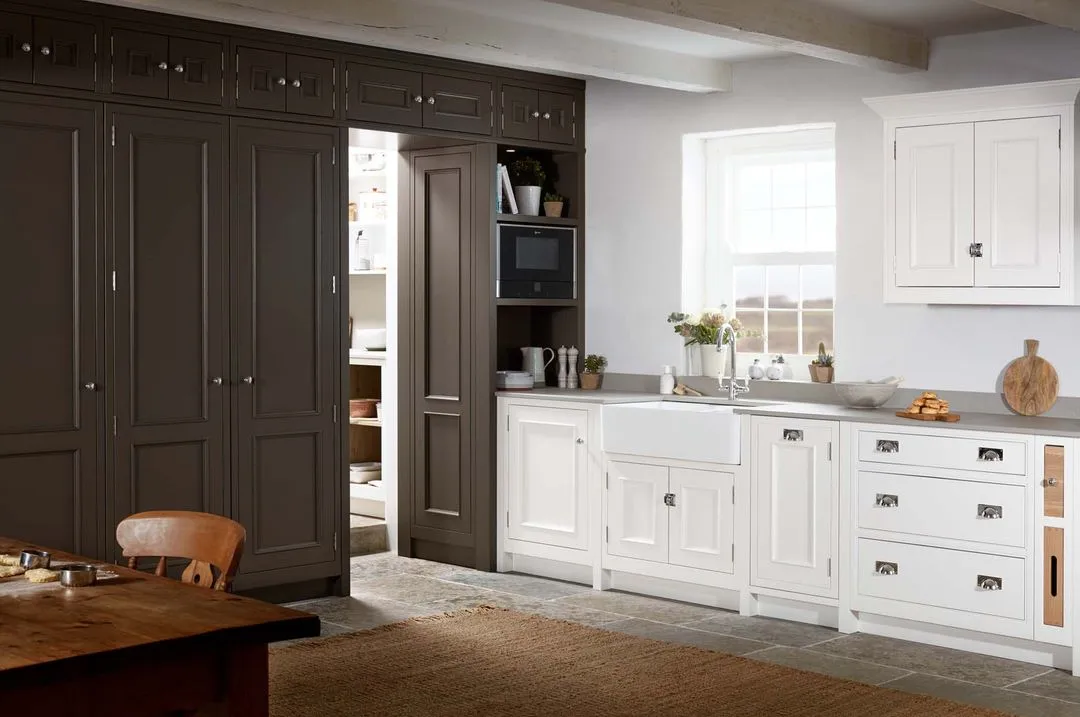
Before colour, before worktops, before appliances, the door style decides what kind of kitchen you are going to have. The three main families are in-frame, shaker and slab, and while there is plenty of variation within each, understanding the differences makes every later decision easier.
Slab doors
A slab door is a single flat panel with no frame or profile. It is the basis of the contemporary German kitchen and the natural partner to handleless operation. Because the door is flat, the finish carries the design: matt or gloss lacquer, real timber veneer, glass, ceramic or textured laminate. Slab doors suit modern homes, open-plan spaces and anyone who wants a calm, uncluttered room.
In our collections, Next125 is the purest expression of the slab door, Leicht offers it alongside more textured options, and Schüller gives you the widest choice of colours at an accessible level. Both 1909 and Novelle also include slab variants for homes that want a quieter door in a more traditional construction.
Shaker doors
A shaker door has a flat centre panel surrounded by a plain frame. It is the most adaptable style there is: painted in a soft neutral it reads as classic country, in a deep colour with brass handles it feels contemporary, and with a simple bar handle it sits comfortably in a modern home. The proportions of the frame matter. A narrow frame looks lighter and more modern; a wider one feels more traditional.
The shaker lives in the 1909 collection in its classic form and in Novelle with a freer, more furniture-like feel.
In-frame doors
In a standard kitchen the door sits in front of the cabinet. In an in-frame kitchen the door sits inside a solid timber frame that is part of the cabinet itself, so the frame is visible around every door and drawer. It is the traditional way of building kitchen furniture, it is more expensive to make, and it gives a kitchen a solid, permanent feel. In-frame doors can be shaker, beaded, Georgian or ovolo profiled, and the frame is usually painted to match.
In-frame construction is the heart of the 1909 collection, whose Georgian, Ovolo and Shaker ranges are all built this way. If you have a period home, or a newer house that wants a grounded centrepiece, it is usually where we start.
Putting it together
| Style | Feels | Suits | Our ranges |
|---|---|---|---|
| Slab | Calm, modern, material-led | Contemporary and open-plan homes | Next125, Leicht, Schüller |
| Shaker | Adaptable, warm, familiar | Almost any home, depending on colour and hardware | 1909, Novelle |
| In-frame | Solid, heritage, permanent | Period homes and rooms that want a grounded feel | 1909 |
Mixing is allowed. A slab-fronted run of tall units with an in-frame island, or a shaker kitchen with a slab utility, often gives a room more depth than a single style throughout.
See the difference in person
The contrast between an in-frame Georgian door and a Next125 ceramic slab is obvious the moment you stand in front of them. All three families are on display in our Saddleworth showroom, and a free consultation is the easiest way to work out which suits your home.