Think per house type, not per scheme
A single kitchen budget spread across a scheme hides where money is well spent and where it's wasted. Budget per house type, against that house type's sale price and the kitchens buyers will compare it with. A modest uplift on a larger house type often returns more than the same money spread thinly across every plot.
Where the money goes
Every kitchen is different, but the cost of a developer kitchen package usually breaks down across the same elements:
- Furniture — carcasses, doors, internal fittings, plinths and panels. Usually the largest element, driven by range, finish and the number of units.
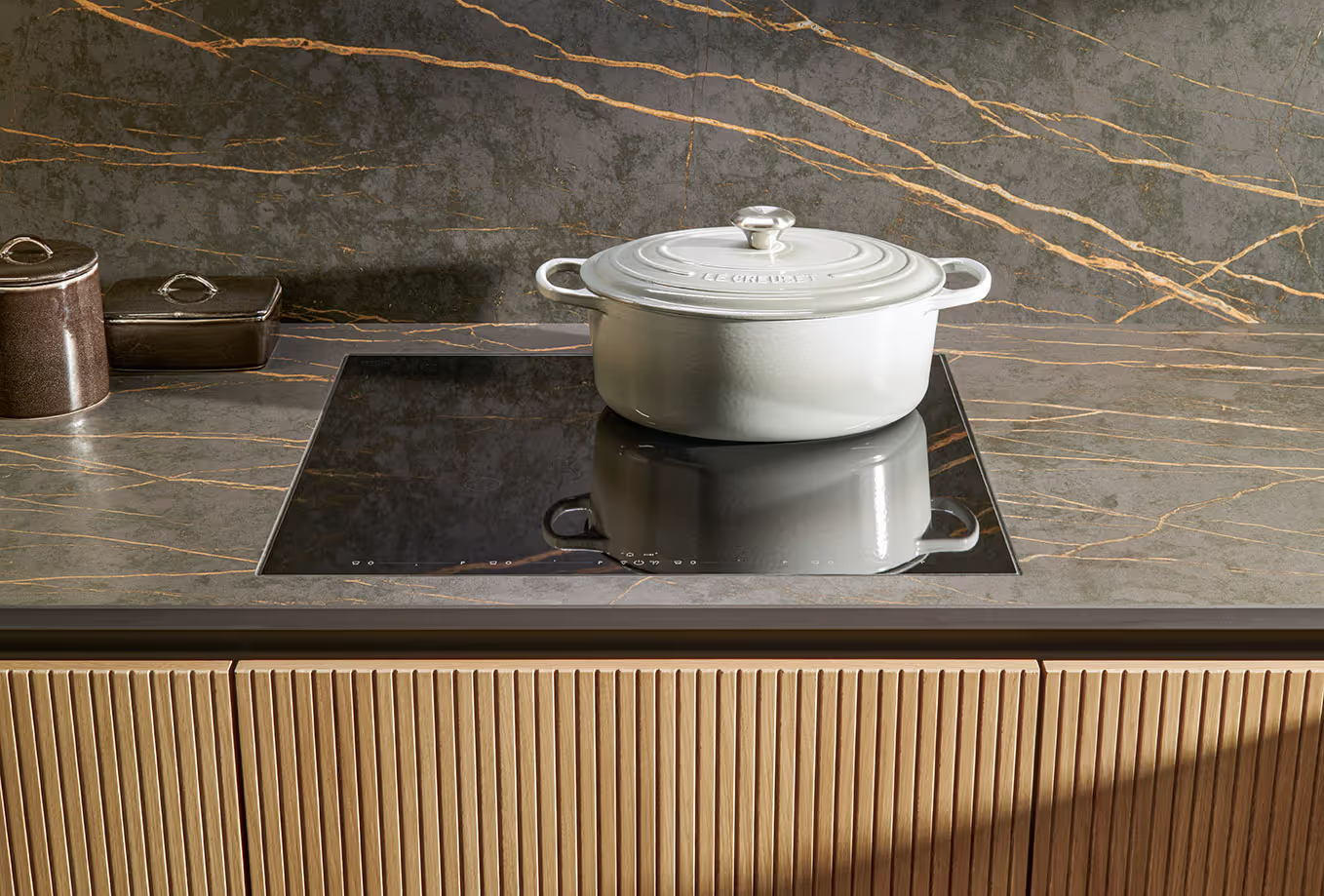
- Worktops — the biggest swing item: laminate to quartz or ceramic can transform both the look and the cost.
- Appliances — driven by brand, the number of appliances and whether they are integrated.
- Sink and tap — small in isolation, but noticed at every viewing.
- Installation — fitting, templating, connections, commissioning and cleaning.
- Logistics and aftercare — delivery, protection and post-completion support. Often left out of comparisons and paid for later.
Spend where buyers look and touch
- Worktops — seen and touched at every viewing; a quartz or compact worktop lifts a mid-range kitchen.
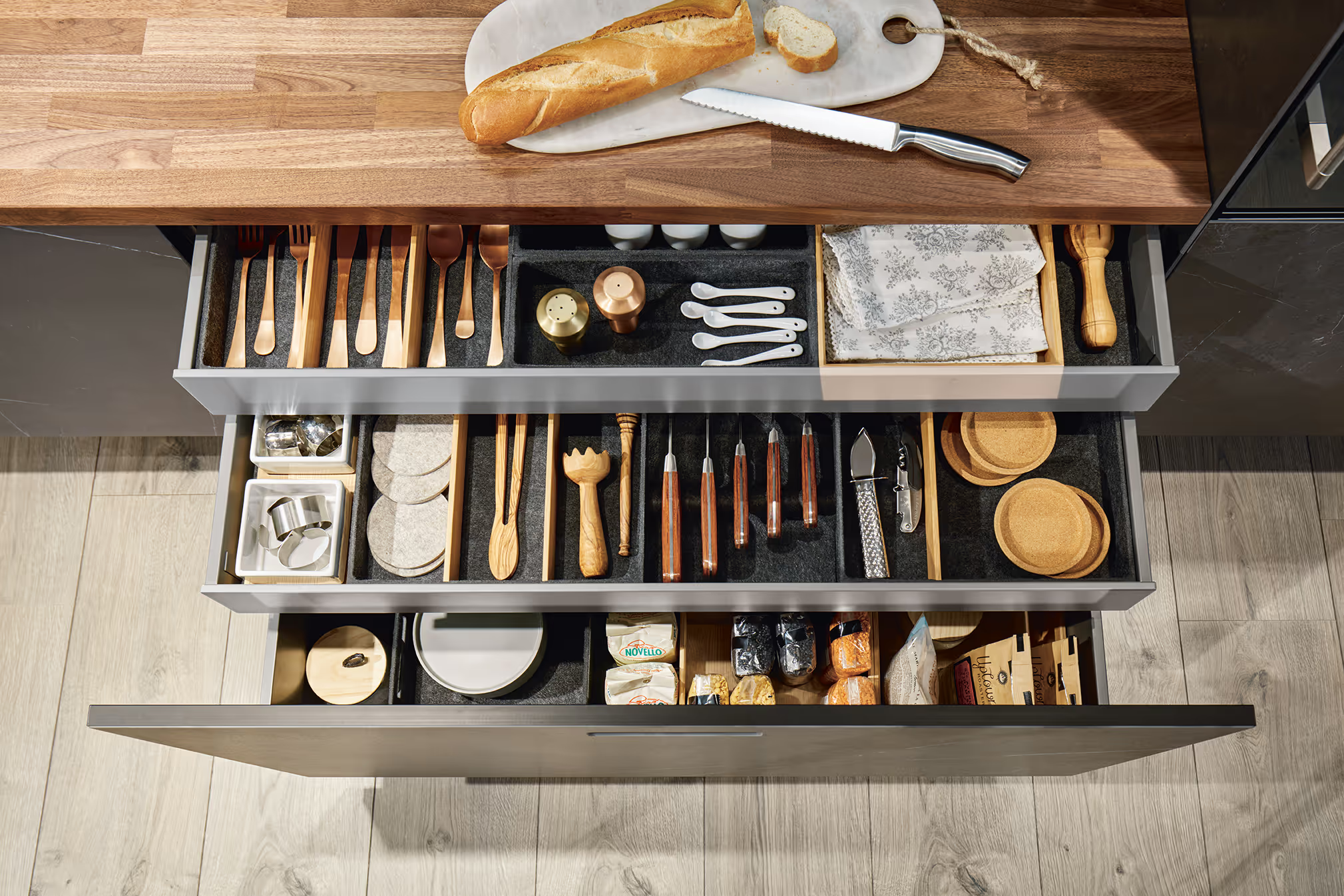
- Drawers — soft-close, full-extension pan drawers signal quality the moment they're opened.
- The tap — a quality mixer tap costs little more and is handled by every buyer.
- Lighting — under-cabinet lighting is a relatively low-cost way to make a kitchen feel premium.
Save where it doesn't show
- Standardise carcass colour and internal components across the scheme.
- Limit door styles and colours to a curated palette — fewer SKUs, simpler ordering, fewer errors.
- Design to standard unit widths — bespoke sizes and fillers add cost and time.
- Keep premium items as upgrades — boiling-water taps, venting hobs and wine coolers sell well as options.
Use upgrades to fund the product
A well-run buyer choices and upgrades programme lets purchasers who value a better kitchen pay for it, while protecting your base build cost. Fixed upgrade prices, a clear options brochure and cut-off dates tied to the programme keep it controlled.
Compare quotes like for like
Kitchen quotes are notoriously hard to compare. Before choosing on price, check each one covers:
- The same range, finish, worktop material and thickness.
- Named appliance models, not just "integrated appliances".
- Internal fittings, plinths, panels, fillers and lighting.
- Worktop templating, appliance connection and commissioning.
- Delivery, protection, quality checks and aftercare.
A tight specification makes this far easier — start with our kitchen specification checklist.