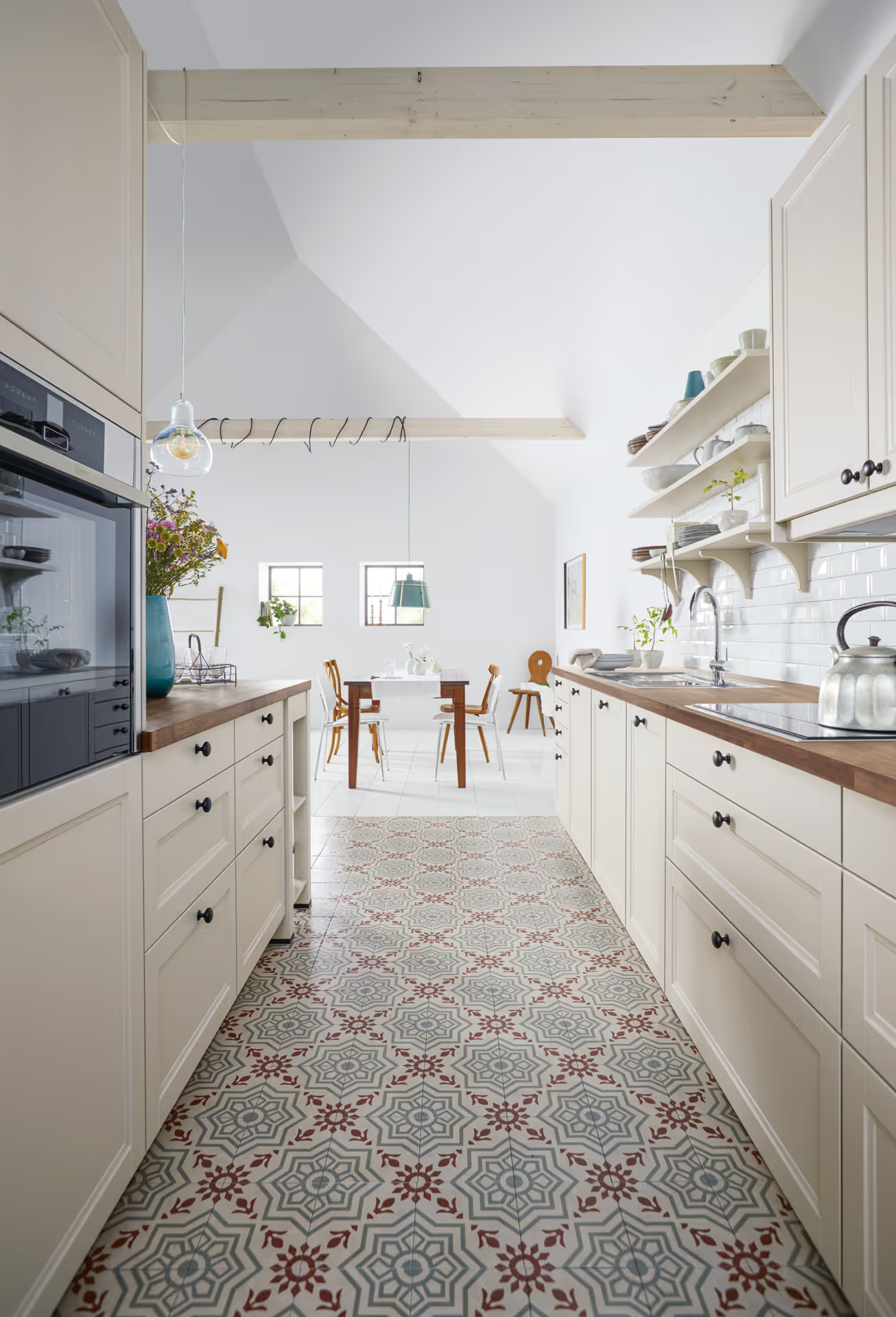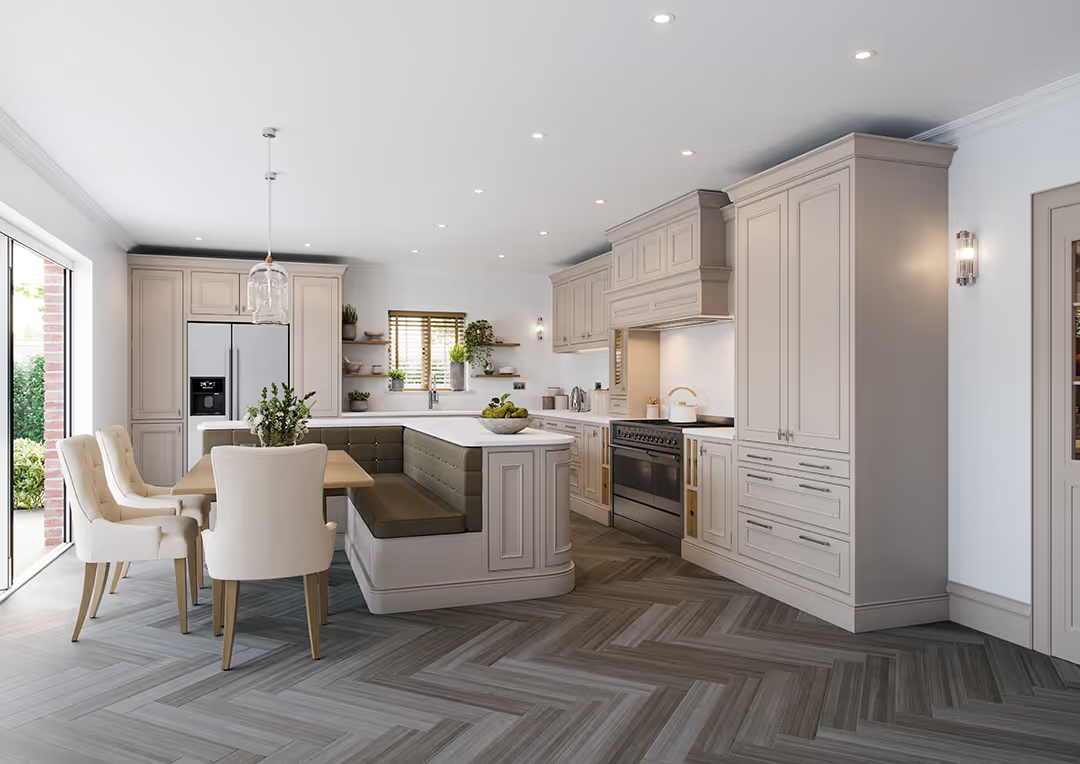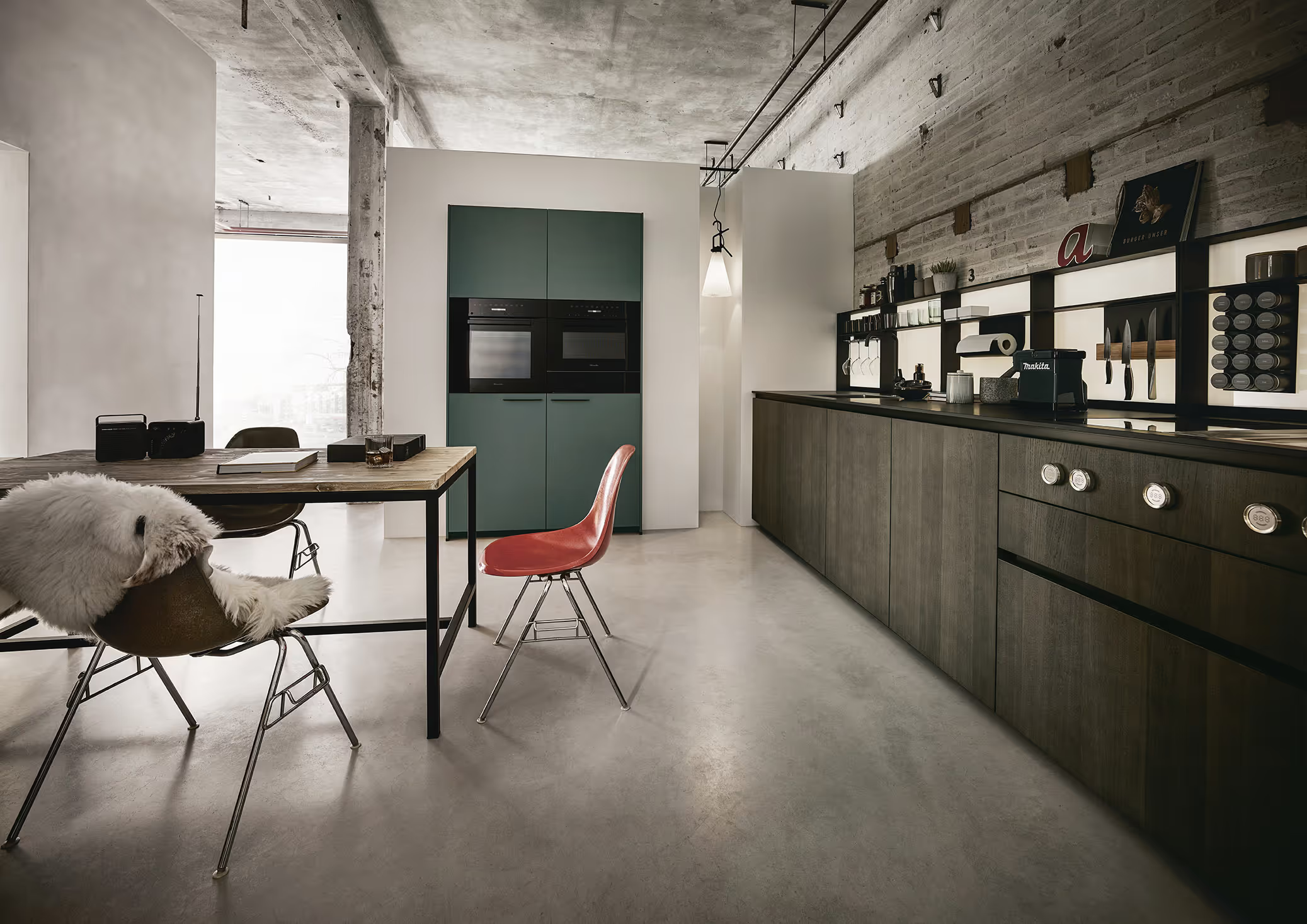
Why the kitchen schedule matters
On most residential schemes the kitchen is one of the largest single fit-out packages per plot — and one of the easiest to get wrong. A loose specification ("fitted kitchen with integrated appliances") invites substitutions, disputes over what was priced, and inconsistency from plot to plot.
A tight kitchen schedule does three jobs: it lets suppliers price like-for-like, it tells site teams exactly what goes in each plot, and it gives your sales team something concrete to sell. This checklist covers what it should pin down.
Layout and house types
- A kitchen layout per house type — plan and elevations, including handed versions.
- Fixed dimensions — wall lengths, ceiling heights, window sill heights and door swings that the design relies on.
- Services positions — sink waste, water feeds, hob and oven supplies, socket positions and extraction route, dimensioned from finished walls.
- Tall units and bulkheads — whether wall units run to the ceiling, stop short, or sit beneath a bulkhead that hides ducting.
- Island clearances — the working space between runs and around islands (1,000–1,200 mm is a common target, and accessible dwellings may set a minimum).
Furniture
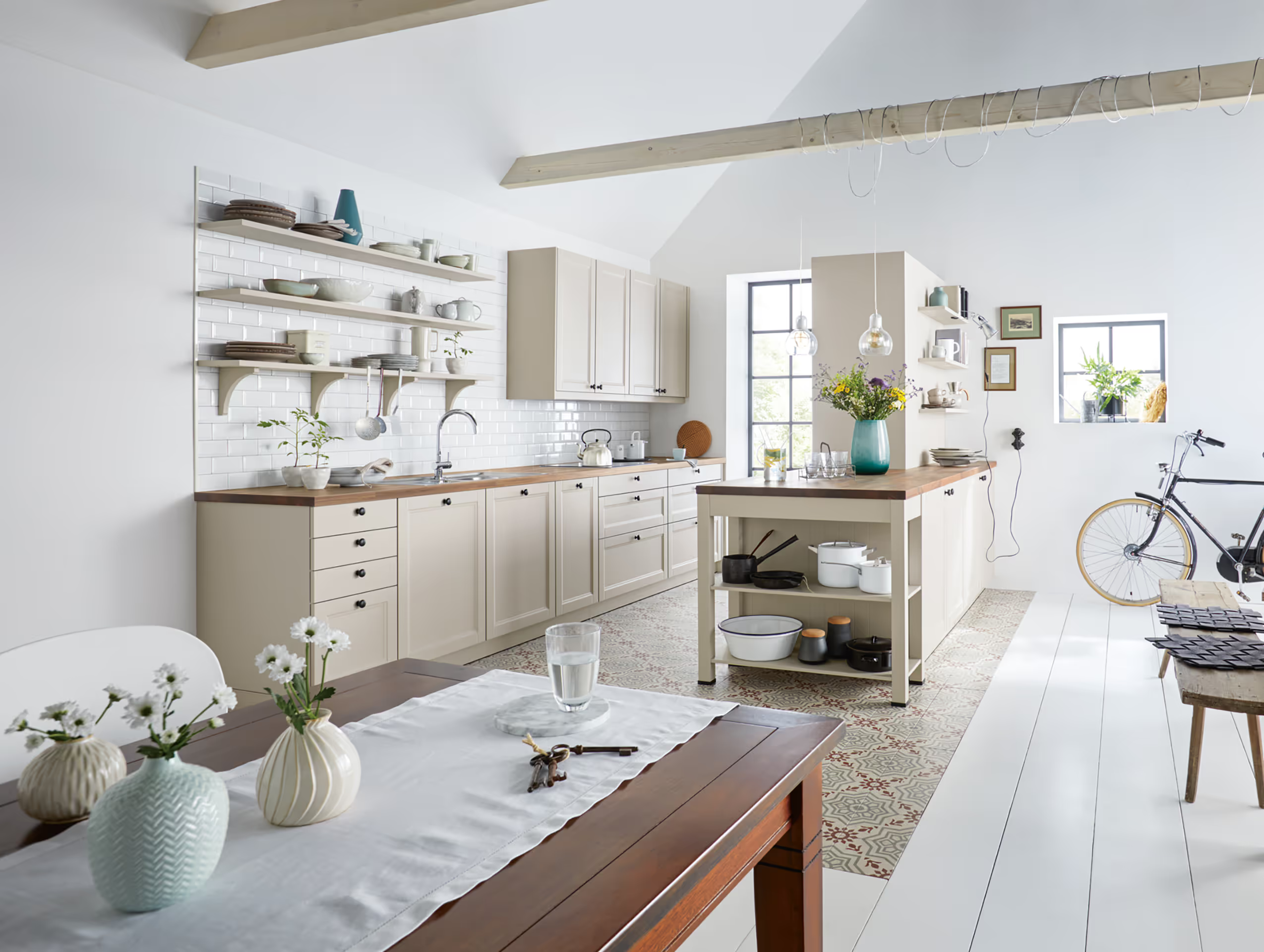
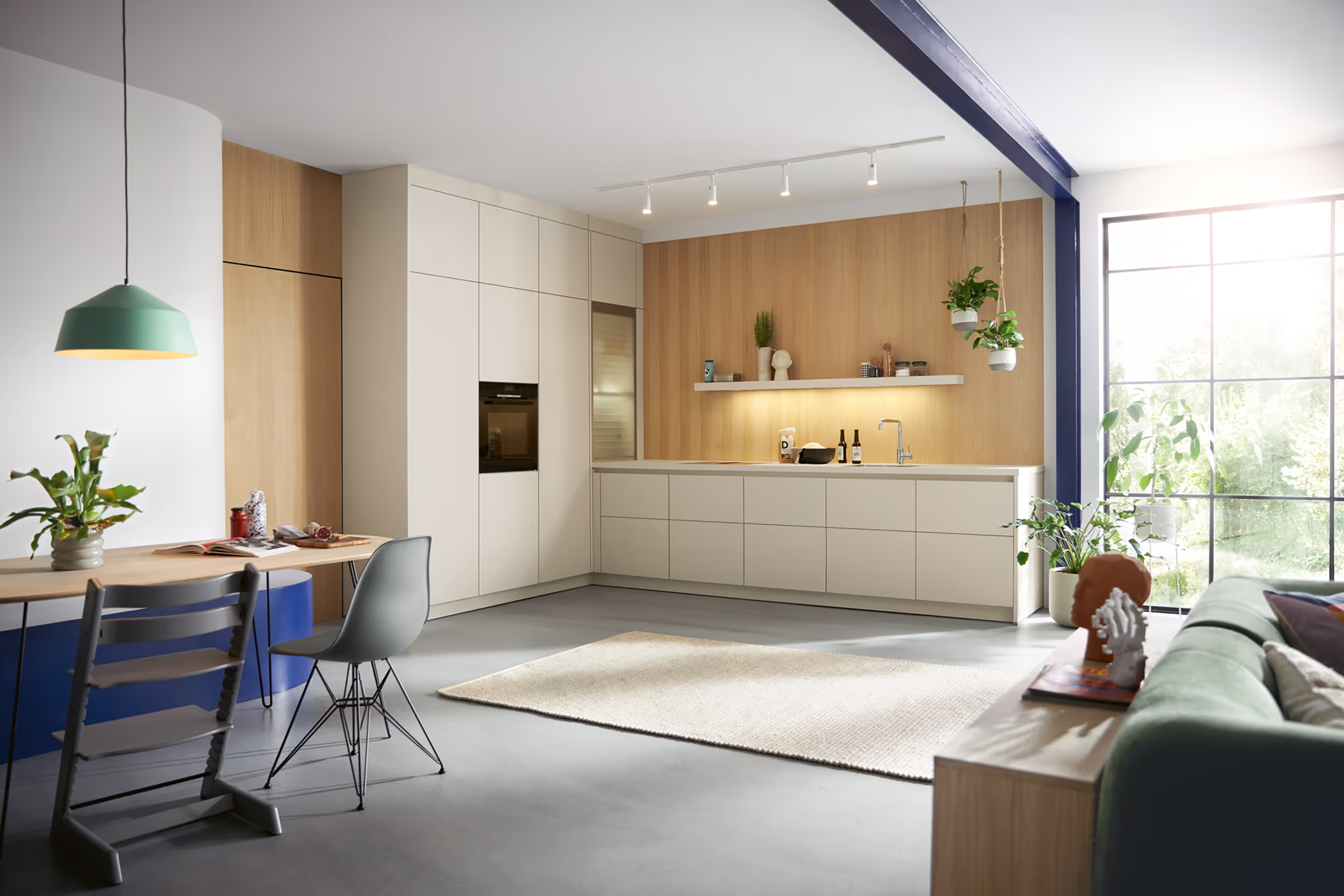
- Range and door style — manufacturer, range name, door profile and finish (matt, gloss, painted, veneer).
- Colour palette — standard colours and any buyer-choice options.
- Carcass construction — material, thickness, colour and back panel spec.
- Handles or handleless — handle model and finish, or the handleless rail system.
- Hinges and runners — soft-close as standard, and the drawer system to be used.
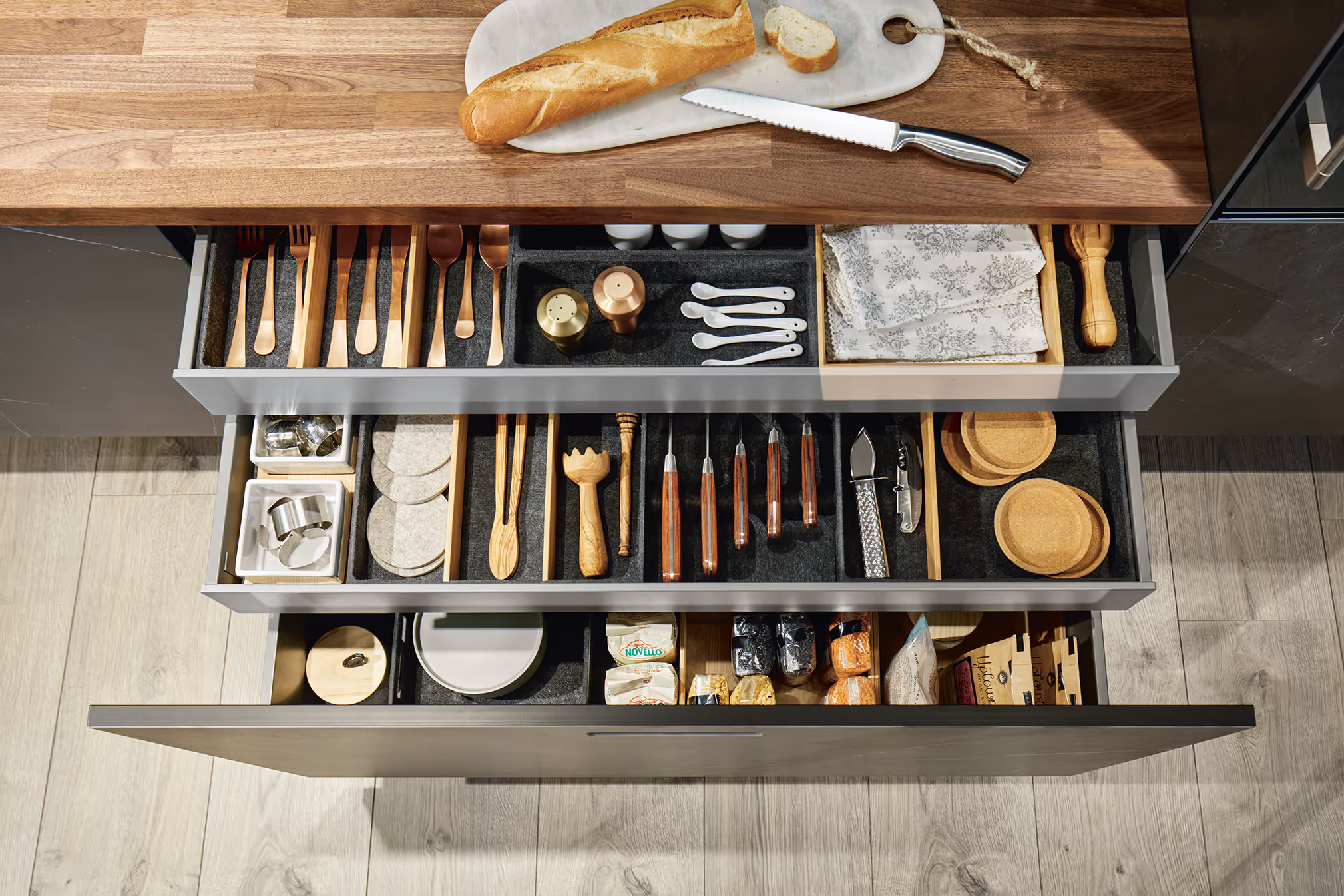
- Internal fittings — pan drawers, cutlery inserts, corner solutions, waste bins and larder internals.
- Plinths, end panels, fillers and cornice — often forgotten, always visible.
Worktops, splashbacks and sinks
- Worktop material and thickness — laminate, compact laminate, quartz, ceramic or sintered stone.
- Edge profile and joints — especially on laminate, where joint position affects appearance.
- Upstands and splashbacks — height, material and extent (behind hob only, or full run).
- Sink type and mounting — inset, undermount or integrated; stainless or composite; bowl configuration.
- Tap — model, finish and any boiling-water or filter upgrade.
Appliances
- Every appliance by make and model — or at minimum a performance specification with "or equivalent approved" wording.
- Oven — single, double or combination; built-under or tall housing.
- Hob — induction is now the default on most new-build schemes; state zones and width.
- Extraction — chimney, integrated, ceiling or venting hob, and whether ducted or recirculating (ventilation strategy dependent).
- Fridge-freezer — integrated split (e.g. 50/50 or 70/30), capacity and fixing type (sliding or fixed-door).
- Dishwasher and laundry — integrated, full or slimline, and whether laundry sits in the kitchen or a utility.
- Energy ratings — minimum ratings where they matter for your sustainability commitments.
Lighting and electrics
- Under-cabinet task lighting — type, colour temperature and switching.
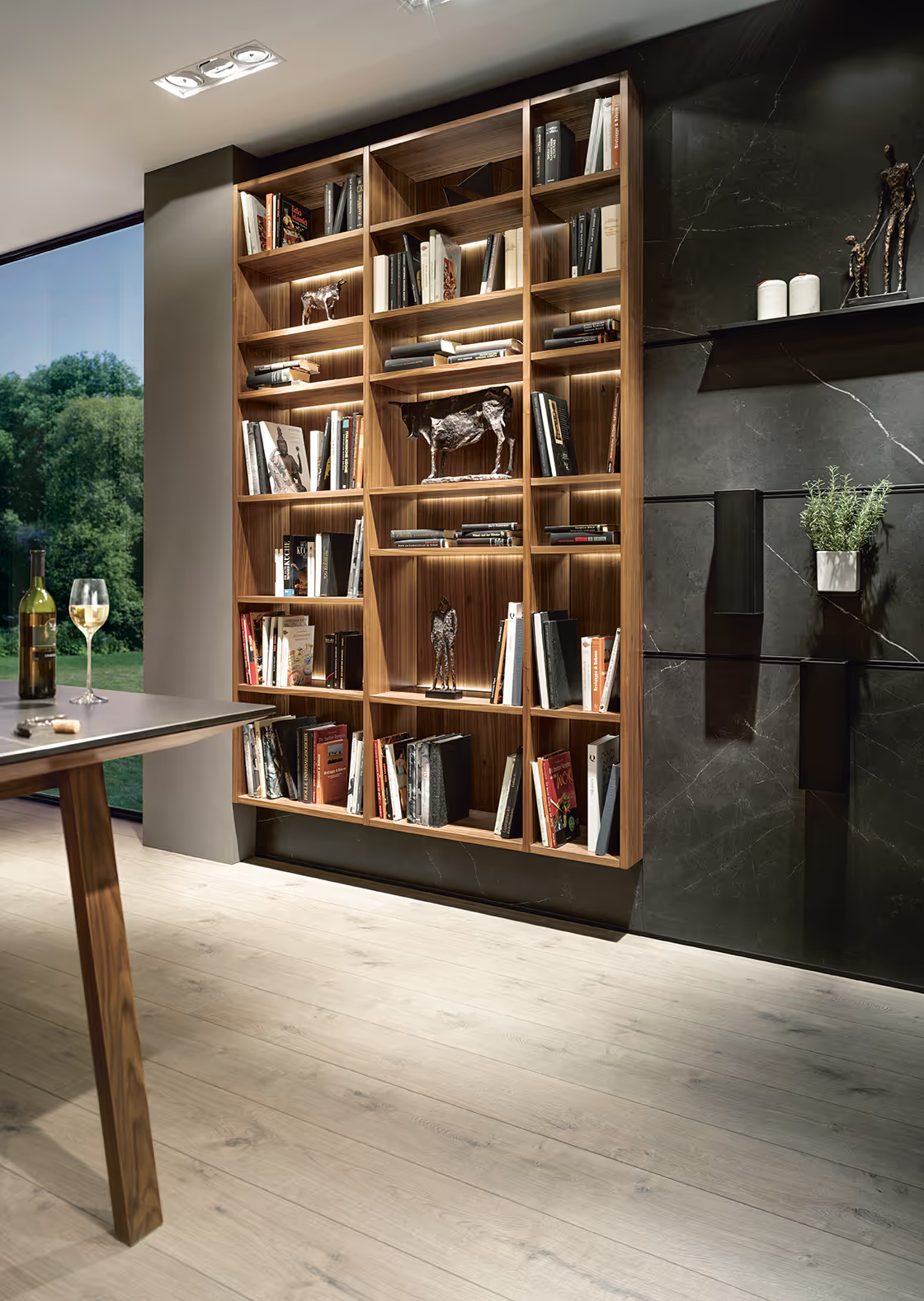
- Plinth, shelf or in-cabinet lighting — if included, and how it is controlled.
- Socket and switch positions — above worktop, on islands, and for appliances (with fused spurs where required).
- Who does what — confirm whether the kitchen supplier or your electrician makes final connections.
Scope, responsibilities and handover
- Scope boundary — supply only, supply and fit, or turnkey including worktop templating, appliance commissioning and final clean.
- Delivery and storage — plot-labelled deliveries, call-off notice periods and who is responsible for storage on site.
- Protection — who protects fitted kitchens until handover.
- Quality check — the standard each plot is checked against before handover.
- Documentation — appliance manuals, warranty registration and care guidance for purchasers.
- Aftercare — how post-completion issues are logged and the target response time.
Tip: tie the specification to a sample or show kitchen that everyone has signed off. When a query comes up on plot 37, "as the sample" settles it in seconds. Our specification tiers are a good starting framework.